Why cheap packaging, often ends up being the most expensive solution

Total Cost of Ownership (TCO): Think beyond the unit price!

When purchasing and logistics departments choose packaging, it’s tempting to focus on one thing: the price per unit. And that makes sense — on paper.
But reality doesn’t stop at the purchase price. Damage during transport, excess weight, handling issues, and customer complaints can turn the “cheap” packaging into an expensive “pleasure.”

This is where the concept of Total Cost of Ownership (TCO) comes into play – and it can save your company money, time, and headaches.


📉 What is Total Cost of Ownership (TCO) in packaging?

TCO is the total cost of using a packaging solution throughout its entire lifecycle.
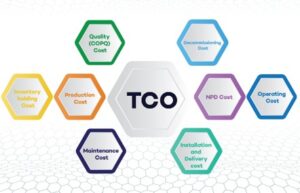

It includes:

  • Purchase price

  • Storage and handling costs

  • Transportation costs (weight surcharges, volume)

  • Risk of transport damage

  • Returns and claims

  • Disposal/recycling

  • Administrative costs


Example: Cheap wooden packaging vs. Heavy Duty corrugated cardboard

A customer in the export industry had used wooden crates for shipping machine parts for years. The wooden solution was cheap per unit, but:

  • The weight of the crates significantly increased freight costs

  • More units were damaged during transport (about 3% claims)

  • Warehouse handling required a forklift and two people

  • The wood needed ISPM15 certification for certain markets


After switching to FARUSA’s Heavy Duty corrugated cardboard,

the customer experienced:

✅ 62% lower weight per unit

✅ Zero damages after 6 months of operation

✅ 20% lower transportation costs

✅ Improved ESG documentation

✅ Better handling and faster packing

The new solution had a higher unit price — but a lower total cost.


🧠 Why it pays to think holistically

By focusing on TCO instead of unit price, you gain:

  • More stable deliveries

  • Less administration and fewer claims

  • Lower CO₂ emissions and easier ESG reporting

  • Better customer experience at the receiving end


🛠️ Ask yourself:

  • What does it cost if 1 out of 100 deliveries is damaged?

  • What is the value of reduced handling time per pack?

  • How much can you save on freight with lower weight and volume?

  • What is the cost of poor packaging in your customer’s eyes?


Need help finding some of the answers?

Scan the QR code and get in touch with your advisor.

 

Related articles

When Swedish precision meets Danish heavy-duty corrugated board

There are two kinds of acquisitions.
The ones where everyone says “synergy” 47 times.
And the ones where people honestly think: Okay… but why didn’t we do this five years ago?

Let’s be honest—what does it actually mean?

Read more
farusa emballage part of nefab

All in one place

In August 2025, Nefab Group announced the acquisition of the Danish company FARUSA Emballage through its subsidiary Nefab Denmark.

Read more

FARUSA achieves FSC® certification!

We are proud to share some exciting news:

We are now FSC® certified!

This is an important step in our sustainability journey – a milestone that means a lot to us, our customers, and not least, the environment.

Read more

AI, 5G and drones, but who`s still packing your goods?

Yep, it’s people after all!
Welcome to 2025.
We have self-driving cars, artificial intelligence writing Shakespeare sonnets (and meeting invites with way too many emojis), and robot lawn mowers named “Mowgli” that send you push notifications.

Read more

Packaging and dating, have more in common than you think.

Parallels between dating profiles and packaging design:
It’s all about presentation, first impressions, and content.

Imagine this: You match with someone on a dating app. The profile picture is sharp. The bio is snappy: “Loves good wine, deep conversations, and sustainability.”

Read more

Why your packaging supplier should be part of your logistics strategy

When packaging and the supply chain work together, the best results emerge.
In many companies, packaging is still seen as an isolated purchasing task. You order, pack, and ship.
But in a modern, globalized, and pressured supply chain, that approach is outdated.
Read why here!

Read more